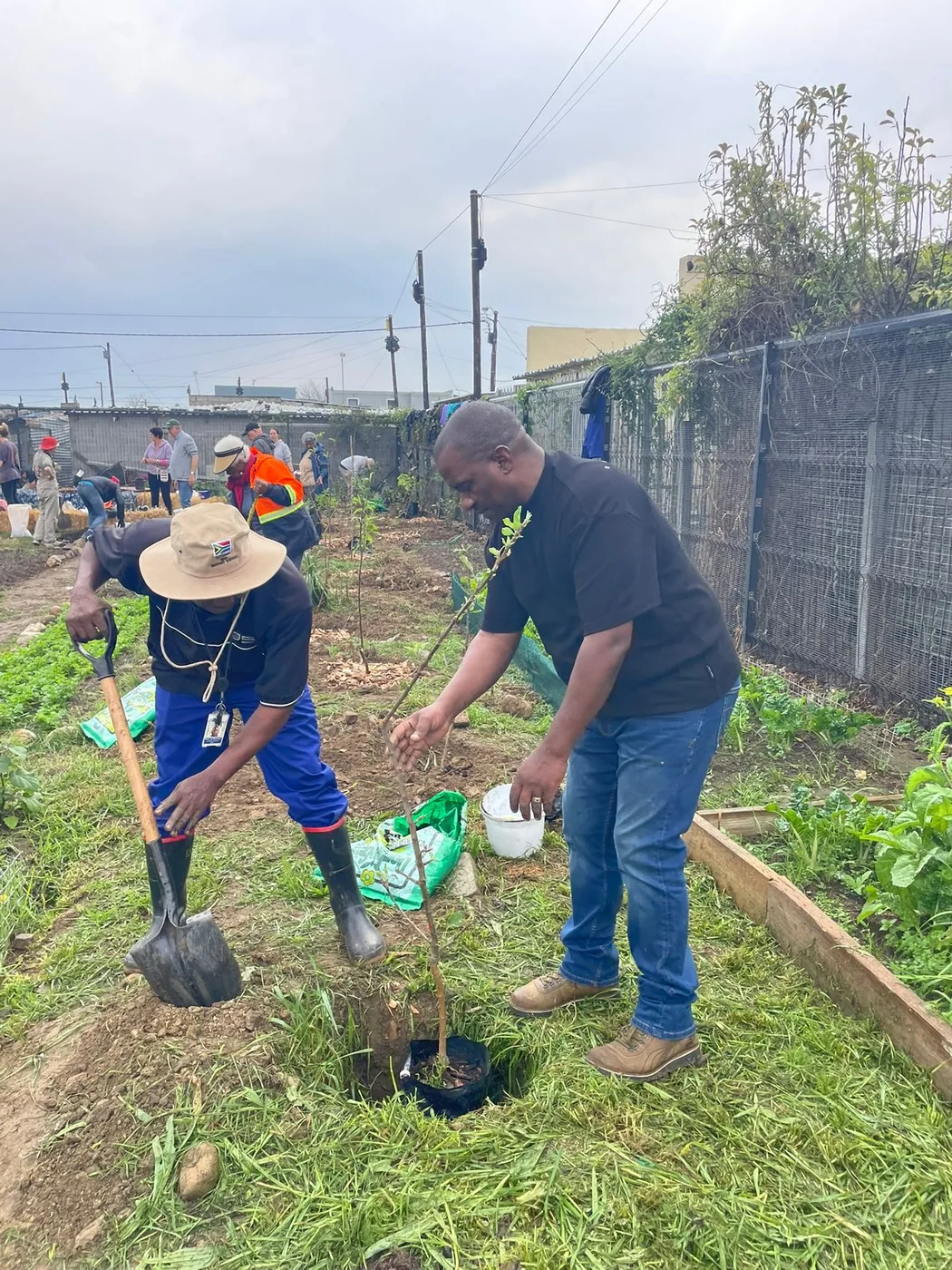
Community planting at Silukhanyo Primary School, August 2026.
The work in context
Rooted in place.
The food forest is part of a wider regenerative campus vision. The Dandelion Club, the school and community members are developing a space where environmental learning can happen through shared work.
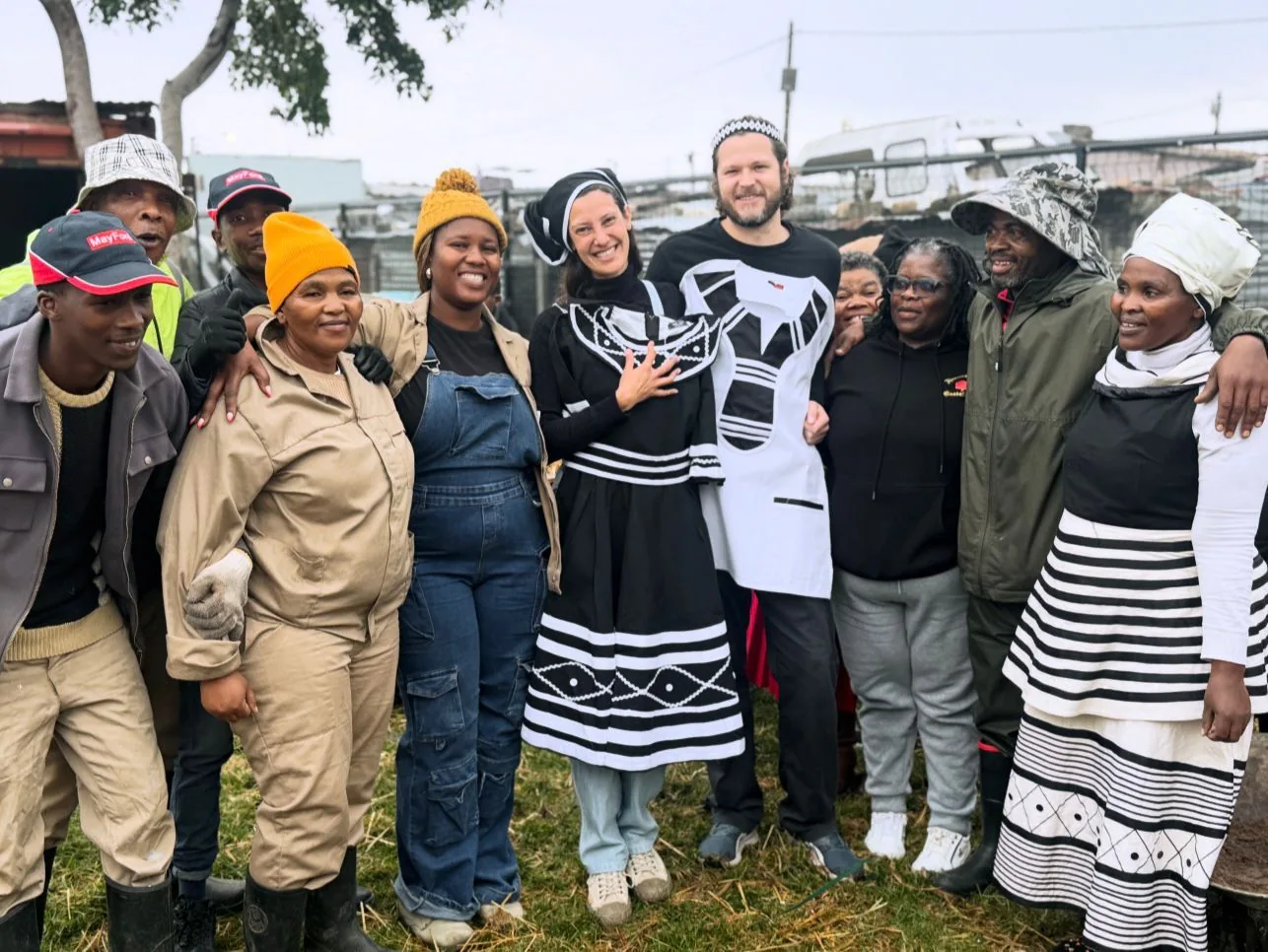
The local campaign invited people to plant the first trees on 29 August 2026. Photographs from the planting day show school and community members working on the site.
The wider ambition is a living learning space that can support food growing, care for the land and practical education over time. Long-term results will become clearer as the forest develops.
The wider Dandelion Club approach
Nothing grows in isolation.
The first planting is one part of a larger idea. The Dandelion Club connects food growing with soil, learning and community through a regenerative cycle.
01 / 04
01 / 04 · Recover
Begin with what is left over.
The Dandelion Club’s model starts with organic material from local restaurants and businesses. Food waste becomes an input for the next stage.
Local businesses, communities and growers each have a role in this wider approach.
02 / 04 · Restore
Feed the soil.
Bokashi and composting turn organic material into a resource for growing. The Silukhanyo campus plan includes composting alongside food-growing areas.
The campus vision connects soil care with gardens, water infrastructure and biodiversity.
03 / 04 · Grow
Make a living learning space.
Food forests combine edible trees, shrubs and perennial plants in layers. At Silukhanyo, the first trees were planted with the school and community on 29 August 2026.
The wider campus vision includes growing areas, a pollinator strip and an outdoor classroom.
04 / 04 · Share
Let the benefits travel.
The Dandelion Club links food growing with practical learning, culture and livelihoods. Knowledge and resources can circulate between gardens, households and local businesses.
The school’s wider vision includes expanded irrigation, a processing kitchen and an outdoor learning space.
The cycle explains an approach. The planting photographs document a beginning; longer-term campus results are still developing.
The people behind the first planting · August 2026
Michelle’s August invitation to plant a food forest also offered a way to dedicate a tree in someone’s memory. Historical invitation for the 29 August planting.